
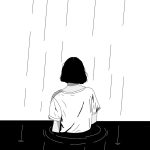
Easier or harder, each of us carries the emotional baggage inherited from childhood.
It’s built from what we experienced at home: the way our parents spoke to us, listened to us (or didn’t), how they taught us to love, to ask for help, to make mistakes.
For a long time, this baggage stays hidden from our understanding. Then, around the age of 25, something shifts.
We start asking ourselves why we react a certain way, why we repeat the same patterns, and why some habits suddenly don’t fit us anymore.
What Happens Around the Age of 25
From a neuropsychological perspective, this is when the frontal lobe — the part of the brain responsible for planning, decision-making, empathy, and self-control — finishes developing.
In other words, we begin to see ourselves through new eyes.
Until then, we mostly functioned driven by impulses, influences, and the need for validation.
Now, the need for meaning, coherence, and authenticity starts to grow.
It’s the time of remarks like:
“I don’t know who I am anymore.”
“I feel like I don’t want to live by other people’s rules.”
“Something in me is changing, but I can’t tell what.”
No, these aren’t signs of confusion — they’re the first signs of emotional maturity.
The Clothes That No Longer Fit
Imagine a closet full of clothes you’ve received throughout childhood. You’ve worn them for years — they’ve protected you, made you feel “at home.”
But at some point, no matter how hard you try, they simply don’t fit anymore. They’re too tight, too rigid, or they just don’t represent you.
The same thing — only much more complex — happens with emotional and behavioral patterns.
If you grew up in a family where being strong meant never crying, you might discover around 25 that asking for help feels impossible.
If you were told you “must be the best,” perfectionism may now exhaust you.
If you learned that “making mistakes is shameful,” you might fear trying new things, even when your soul longs for them.
These patterns had a purpose — they helped you emotionally survive in your childhood environment.
But as an adult, you can consciously choose what to keep and what to let go.
“I Don’t Want to Be the Perfect Child Anymore”
Ana, 27:
“I realized I’m always trying not to upset anyone. To be the ideal employee. To get straight A’s, to be polite, never to contradict, to dress ‘appropriately’ — whatever that means. And I feel like I’m drowning in an ocean of anxiety, without hope of being saved.”
We talked about her childhood in a small mountain town, where everyone knew everyone, where her anxious mother — always worried about “what others might say” — still examines her with squinted eyes and a long tsk-tsk.
Ana had unconsciously inherited that worry and turned it into perfectionism. And anxiety.
Her process of awareness began with a simple-looking exercise:
– Today is Thursday. A week from now — so you have time to get used to the idea — will be the day you intentionally do those things that might displease others but feel right for you.
– You mean… intentionally?
– To do them intentionally, you first need to recognize what they are. So start by making a list.
Dutiful as always, she almost started writing right away — she didn’t want to disappoint her therapist.
But one look and a smile were enough — we’d been working together for months — for her to understand that the list could wait. It would come when she was ready.
It took time, more than the week we’d set. Because even though Ana said she was ready to face what she called the “ballast” in her emotional baggage, letting go wasn’t that easy.
From Inheritance to Personal Choice
One of the most protective shields we hide behind is the phrase: “I’m like this because of my parents.”
And yes, every parent has a massive influence on who we become as adults.
But emotional maturity means understanding without blaming. That’s the essence of transformation — not stopping at blame, but moving toward choice.
Our parents gave us what they knew and could.
They passed on patterns they themselves had learned.
Many didn’t have access to the information, resources, and emotional support we have today.
Recognizing their limits doesn’t mean accusing them.
It means acknowledging reality — so we can consciously decide what to do next.
Our emotional luggage isn’t a sentence.
It’s just our starting point.
Around 25, an Inner Redefinition Begins
We open the suitcase we left childhood with and start sorting through it:
What values do I want to keep? (Respect, empathy, responsibility?)
What habits no longer represent me? (Fear of conflict, need for control, harsh self-criticism?)
What do I need to learn now to become my true self?
When these questions start to appear, you’ve already taken the first step.
How to Turn Emotional Luggage into an Ally
Before finishing her list, Ana went through several stages:
1. Daily self-observation
She kept a journal of the moments she caught herself reacting “on autopilot.” In a separate column, she wrote how she felt each time. Gradually, she began to see a clear picture of why she so often felt suffocated — on the verge of drowning.
2. Acceptance of the past
We can’t rewrite it, but we can change how we look at it. Acceptance doesn’t mean approval — it means release.
3. Kindness
Emotional maturity isn’t a race. There will be steps backward, confusion, guilt. A bit of gentleness — and self-compassion — goes a long way.
4. Conscious conversation with parents
Ana managed a few times to tell her mother, simply: “This is how I felt back then.” Her mother’s reaction wasn’t what she’d hoped for — but for Ana, it was still a victory.
5. Continuing therapy
In therapy, she stopped blaming her mother and started reconnecting with her own needs, emotions, and feelings in this new chapter of her life.
The First Paragraph of Your Own Story
It’s not fair to put all the blame on our parents — but it’s also not healthy to deny their impact.
Balance lies between understanding and responsibility: I know where I come from, but I choose where I’m going.
When you reach that point, you stop repeating unconscious patterns and start writing your own story — one in which love, courage, and freedom are not just inherited, but cultivated.
That’s the moment when emotional baggage stops being a burden and becomes a resource —
a map of where you’ve been, not a label of who you are.

